The Myth of Semicolons

I don’t know how many times I’ve had red marks scrawled across my paper because I’ve committed the unforgivable sin of using a semi-colon. Most of my critique partners sniff and say it’s just not done in popular writing–only literature.  Not done? But I just did it, and correctly too I might add. Besides, I don’t think the little used dot and comma considers itself sullied by being in my paranormal romance novel or my SciFi one either.

Another critique partner once quipped that semicolons encourage long sentences. I’ve judged enough contests and have had a few verbose writer friends to know that is a bald-faced lie. There are plenty of paragraph long sentence without a semicolon but plenty of commas. Why is no one calling for those evil commas to be banished to Prose Purgatory?

Okay, maybe I’m being a little overzealous in my defense of the poor, maligned semicolon. But it is one of the few punctuation marks that I know how to use properly. Why? Because once upon a time, I submitted a paper were the difference between an A and a B rested on its tiny shoulders. I got the B and never forgot how to use the semicolon.

So how does one use a semicolon? I’m glad you asked. Here are the three ways I distinctly remember:

1.) To connect two independent clauses (complete sentences, for us non-English majors) that are closely related but not linked by a conjunction. NOTE: For those who slept through English class and didn’t have the benefit of Schoolhouse Rock growing up, conjunctions are words like and, but, or, so, etc.)

Correct: I’m going out; the house smells like death.

Incorrect: I’m going out; to escape the smell of death.

Incorrect: I’m going out; and the house smells like death.

In the correctly used sentence above the semicolon replaces the conjunction.

2.) To connect a series of three or more items when commas are already present.

I’ve lived in Phoenix, Arizona; Sydney, Australia; Baltimore, Maryland; and Brooklyn, New York.

Notice that like a comma the semicolon is attached to the word that precedes it and separated by a space from the word that follows. NOTE: Unless the word that follows a semicolon is proper noun it should begin with a lowercase letter.

3.) To connect conjunctive adverbs and transitions. These include things like nevertheless, however, therefore and on the other hand.

Example: I was born in the United States; however, I am a British subject.

The interesting thing to note is that you don’t need to use it. In most cases, a period will work just fine. Guess that’s why some insecure people consider it showing off your college education. Why not? I paid for it. Don’t you show off your car, designer clothes, and latest electronic gadget?

‘Nuf said.


Posted in craft, Writing | 2 Comments

Before you sign that contract…

(Disclaimer time: I’m not a lawyer nor do I play one on TV. None of the opinions in this article should be construed as legal advice, when in doubt consult a licensed intellectual property lawyer.)

Three major milestones in every writer’s career are finishing a manuscript, submitting it to an editor and ‘The Call.’ Of these, only ‘The Call’ propels a mere writer into the hallowed halls of published author. For some, the golden road dead ends with novels mired in bankruptcy court. So what can an author do to avoid such litigious quicksand?

1.)                Read your contract and do not believe the bankruptcy clause will protect you. All of the authors I interviewed said the courts ignore this clause and are selling their contracts as assets to pay off the company’s debts. Tina Gerow (www.tinagerow.com) says, “if something in the contract feels like you are getting screwed – then don’t sign it.  Things like 20 year contracts, rights that don’t revert back to the author, or any other horrible terms – keep looking – there are places out there with better ones.  Have a literary attorney look over the contract if you aren’t familiar with contracts – it’s worth the money!!”

2.)                Research the company BEFORE you sign. As authors we are used to doing research. In fact, most authors were happy with the amount they had done before signing their contracts however… Look for specific things. Melanie Atkins (www.melanieatkins.com) recommends, you “talk with their authors and find out how easy it is to communicate with management, if the authors are happy and believe they are being treated fairly, if the company pays on time, if the editing is good, etc.” Sharona Nelson (www.sharonanelson.com) explains that when contacting authors with the house “make it clear you aren’t asking amounts or personal financial details, just whether they’ve been paid, and how they’ve been treated. This one fact should make it glaringly obvious whether the enterprise is sailing or sinking.”

3.)                Remember writing is not just a business; it’s a partnership. Having been burned once, Cindy Appel (www.cynthianna.com) sums it up by saying, “We should both be working at gaining sales and making the purchasing process easy for the reader. If a publisher doesn’t act like they’re able, interested or capable of promoting my book, then no amount of self-promo is going to help that book sell.”

4.)                Trust your gut/instincts/that little voice inside your head. Whatever you call it, know that subconsciously you are picking up on something either said or unsaid that is raising red flags. Don’t sign the contract until the little voice quiets.

5.)                Sticking with an established business is a good way to hedge your bets. According to the Small Business Association, “two-thirds of new employer establishments survive at least two years, and 44 percent survive at least four years.” Basic math tells you that 66 percent fail in those first four years. Cindy (www.cynthianna.com) recommends you investigate further to discover if “the people in this e-publisher been involved in another e-publisher that folded? What were the circumstances surrounding that publisher’s collapse?”

6.)                Communication is key. Speaking frankly Tina (www.tinagerow.com) says, “Don’t let them (the publisher) make you feel like you can’t ask.” All the authors shared the same experience: before their publishers filed bankruptcy, they ignored emails and treated authors as trouble makers if they asked questions.

7.)                Distinguish between self-promotion and book promotion. Yes, promoting your latest release is a necessary part of the publishing business but promoting your brand can be done even without a book to sell. Sharona (www.sharonanelson.com) says the bankruptcy of her publisher hasn’t affected her promotion efforts. She says, “I always promote my “brands” as opposed to promoting a specific publisher. It’s just better for my bottom line to do so.”

8.)                Multiple Publishers is the way to go. Melanie (www.melanieatkins.com ) is quick to point out the disadvantages of putting “all of my eggs in one basket… I would advise all authors to publish with multiple houses–so if one house goes down, you still have books out there.  It’s much safer that way.”

9.)                Learn from your experience.  Did you make it through the process to the finished book? Then you’ve learned about proofs and galleys. You’ve learned how to promote your book and where to spend your money effectively. All these are valuable knowledge that not every writer has gained. Even if you didn’t make it to a finished book, you’re know a little bit more about what to look for in a publisher and some of the warning signs of a bad publisher. Don’t waste the knowledge, pass it on, just like Tina, Cindy, Sharona and Melanie did.

10.)            Don’t give up on your dream! It may take a lot of people to get you on the New York Times best seller list but only one can derail all your dreams: You. Keep writing, you’ll be glad you did.

Nothing in life is fool-proof but sometimes you can hedge your bets. Businesses come and go and you may find yourself and your dreams caught in the middle. Knowledge is the best means to prevent such a thing from happening.  A big thanks to Tina, Cindy, Sharona and Melanie for all their help with this article.

Posted in Business, Writing | Leave a comment

Interview with Karina Fabian


Can you tell us a little bit about your latest release and what
spark prompted you to write the story?
Good friends with wacky ideas.  Kim Richards started a new publishing 
company called Damnation Books.  On the Writers' Chatroom, we came up
 with the idea of an anthology of zombie stories as one of its kick-off books.  Somehow, someone
 suggested recipes, and The Zombie Cookbook was born.
I said I'd write a story, but I wasn't really coming up with much until my friend Becca Butcher 
started nagging me.  So I got silly and came up with a zombie exterminator and her partner taking
 on an infestation in a Korean restaurant. "Wokking Dead" starring Neeta Lyffe had me giggling 
for the whole hour it took to write.  Sometimes stories just have to get written.

People liked Neeta, and someone asked Kim if there was a novel coming.  Kim caught me on the 
chatroom when we were discussing unforgettable first lines and reality TV.  Somehow in that 
conversation, starting the novel with "They ate Eidelberg.  Dammit, thought Neeta, I hadn't 
finished training him!" popped into my head, and Neeta starring in a reality TV show was too
 rich to resist.
Have you always loved zombies and do you keep with the traditional zombie shuffle or do you have 
them run such as in a few more recent movies?

Actually, I’m not a zombie fan.  The most exposure I've had to the zombie culture playing 
"Give Me The Brain," which is a hilarious card game about zombies running a fast food restaurant.
I didn't even watch Zombieland until early November--six months after writing the novel.
My zombies can run, if they were so inclined in real life. Unfortunately, since very few people
are buried in running shorts, it's hard to tell which ones are going to take off after you and
which are going to shamble and groan.

How did you come up with such a wonderful title, Neeta Lyffe, Zombie Exterminator?
It seemed like a no-brainer name for a 20-something woman whose whole life is about re-killing
the undead and spraying people's homes for roaches, termites, etc.  Plus, in "Wokking Dead," 
she's kind of pining after her partner, who (she thinks) doesn’t realize she's alive.

Do you plot your stories out or do you just start writing?

I have a very loose idea of the beginning and end, and maybe some ideas for the middle, but 
mostly, I let my characters lead me.  It's much more fun, even if it can get frustrating.  
Usually, when I'm written into a corner, I can make a vague idea-type outline by putting plot 
points on post-it notes and re-arranging them on a wall.

What was the funniest thing you learned about your heroine from writing her story?
 I don't know if it's funny, but she has a really low tolerance for clingy boyfriends.  
Ironically, so does my teenage daughter.  She really didn't like Neeta's love interest, and I 
did find that funny.

Which of your characters is most like you and which is least like you?
I think a lot of them have some elements of me, or what I'd like to be in my wildest imaginings,
but none are especially similar to me. 
Can you describe your office or where you normally write?
It changes.  "Wokking Dead" was written sitting in a hotel room while my husband played computer
games on the hotel TV. (We were house hunting.)  Neeta Lyffe was written in my study, which was 
part of our bedroom in California.  My roll-top desk was separated from the rest of the room by 
partitions, and I had a fabulous view of our backyard, which has a lovely garden.  Now, we're in Utah, and I'm writing this interview on the kitchen table, surrounded by my son's schoolwork, with a view of the snow falling on the autumn leaves.

Which came first the plot or the characters?

Characters usually come first for me.  Then I live the stories with them.

Have you ever gotten stuck while writing a scene or chapter? How did you overcome it?

The only time I got "stuck" in Neeta Lyffe was when I was mapping out the big finale zombie 
attack.  I spent an entire day just looking over the same piece of land in Los Angeles, building
an imaginary factory there, considering traffic, looking at sidestreets, etc.  I kept whembling
over whether it would work or not.  The next day, however, I flew through the scene.

What is the wackiest thing that's ever happened to you since you started writing?

Well, I think being a Catholic writer with the motto of "Fiction, Faith and Fun," yet getting
published with Damnation Books is pretty wacky.  When I get royalties from DB, we call them 
the "wages of sin.
Posted in Books, Writing | Leave a comment

Mooning Around

Recently I’ve streamed The Universe by the History Channel on my Wii (thank you Netflix). One of the episodes I just finished watching was about our moon. As someone who literally has built new worlds as backgrounds for some of my SciFi novels, I knew the moon was important but didn’t realize how important it was until this program.

If we never had our moon:

Earth’s molten iron core would be much smaller and would probably already have solidified like Mars’s has. What does this mean? Life would probably exist only deep within the oceas since no magnetic field would be around to protect us from radiation. Also, our continents would be fairly flat given that there’d be no plate tectonics giving us mountains.

Our day would be much shorter. By orbiting us, the moon actually slows the Earth’s rotation, lengthening our days.

Earth would still have tides twice a day but they would be the same height each time. In other words, no tide pools were life diversified (in theory) and crept on the land (if it weren’t irradiated as soon as it stepped out of the water).

Our planet would wobble significantly more than it does now. We’re talking 15 to 75 degrees over a course of a million years. Tropics in Year One would be the frozen poles in Year One Million and vice versa.

Then there’re the dark nights, without the moon to reflect light back at us and the superfast winds (not to mention wild hurricanes and tornados that lasted for  months).

Not really focused on in the show was the number of hits from meteors, asteroids etc that the moon has prevented from reaching Earth or deflected away because of its gravitational pull.

I’m sure I’ve missed a few important contributions our lunar lovely has given us. But that just gives you motivation to check it out yourself:-)

Posted in Science, Writing | Leave a comment

Writing Description

Description.

Some people love it, others hate it.

Used poorly, the story’s pacing tanks and readers set the book down. But used effectively, description brings the characters and story alive, drawing the reader in and keeping them emersed in another world long after they should have turned off the lights and gone to bed.

So how does one use description effectively? Below are four suggestions.

World building: Although this term is usually applied to Science Fiction and Fantasy, every writer needs to ground the reader in a time and place. For example:


Jane sat at the table and stared at her plate.


Technically, there’s nothing wrong with the sentence, but does it really convey what the reader needs to know? Does it tell us what genre we’re in? Here are different versions of the same action.


Jane perched on  a rickety wooden chair and gaped at the single black potato on the chipped blue plate. This was dinner?


Jane sank onto the cushioned high backed chair. The emerald green tablecloth crackled with static electricity where is rubbed against her silk ball gown. Regiments of sparkling crystal, shining silverware and towers of bone china reminded her that she was an interloper in the halls of the beau monde.


Enchancing mood: Snoopy typed out those magic words, ‘it was a dark and stormy night’ and I knew exactly what he meant and shivered in anticipation the story to come. Gothic romance is known for its brooding heroes and atmosphere. But whether you write dark suspense or romantic comedy, your description needs to amplify the mood.


Night crept into the room, swallowing the candles’ light before it reached the shadows lurking in the corners. The old mansion creaked and shuddered under the storm’s onslaught. Rain tapped on the window panes of the French doors, demanding entrance, while beyond the flagstone balcony topiaries twisted into grotesque monsters lurching ever closer to Jane’s sanctuary.


The sun beamed down from the clear blue sky like a giant smiley face. Droplets from last night’s shower caught the golden rays and cast rainbows about the park. Along the gravel path meandering through the verdant expanse, children splashed in the clear puddles. Jane laughed as a Chocolate Labrador tried to catch the diamond spray.


Echoing Emotion: How we react to people and things around us is often a reflection of what we feel.


“I wouldn’t have you if you were the last man on Earth,” Jane said.


“As far as you’re concerned, I’ll be the last man you’ll ever have,” he replied.


Quite bland really. Now try this…


“I wouldn’t have you if you were the last man on Earth.” Jane wiped her palm on the arm  of the overstuffed chair. The sweat coating her palms

changed the gray microfiber cloth to charcoal. Tears filled her eyes and the gallery of family photos on the opposite wall morphed into a kaledioscope of lies.


“As far as you’re concerned,” He raked her from head to toe with a scathing glare then marched acrossed the eclectically furnished livingroom and twisted the brass knob on the front door. “I’ll be the last man you’ll ever have.”


“I wouldn’t have you if you were the last man on Earth.” Jane flattened herself against the drywall. Her palms bumped over the orange peel texture and her racing heart seemed to transmit along the  white wall, rattling the framed photographs hanging not far from her.


“As far as you’re concerned,” he braced his hands on either side of her head, boxing her in while peppermint scented words caressed her bare shoulders. His body heat buffeted her, melting the  ice encasing her deterrmination. “I’ll be the last man you’ll ever have.”


Action/Reaction:  Everything your characters do has an effect and what better way to avoid musty, stale blocks of description than have your hero/heroine interact with their world.


Jane checked the flower arrangement and the place settings.


Jane’s fingers fumbled with a scarlet cabbage rose, pulling it to a place of honor amongs the others arranged in the Waterford vase. After adjusting the trajectory of one cattail, she smoothed the siilk tablecloth and centered fans of black linen napkins on their gilded plates.


Jane’s fingers fumbled with the black-eyed susans and daffodils in the mason jar. After adjusting the angle of a sprig of fern, she centered the makeshift vase over a burn mark on the scarred table and centered the triangular paper napkins over the mismatched plates.


Notice the verbs are the same in both sentences (conveying similiar emotions) but by choosing different words the luxury or lack thereof in each paragraph is different.


Of course great writers make things seem quite effortless and we’ll gobble up the words with little thought of the effort it took to get them on paper.  If you had to edit the following sentences, how would you change them?


Jane looked out the window and sighed. It’s going to be a nightmare getting home.


or


“You don’t know what you’re talking about,” Jane declared.


“Wanna bet,” he replied.


Posted in craft, Writing | Leave a comment

Characterization Tip

This year, I’ve decided to reread some of the writing books in my library.  I wondered if, ten plus years on, I’d learn anything new. So far I am a third of the way through Writing for Emotional Impact by Karl Iglesias.

While I haven’t learned anything new, per se, I did find a nugget of wisdom that I don’t remember reading before. Basically, he said it’s not enough to give your hero/heroine traits when filling out your character questionnaire or interview, you must also decide how he/she will express those traits in your writing. By knowing the key actions/habits you will be able to show the reader the specific trait rather than telling them about it.

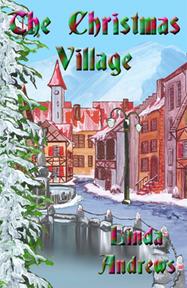
While I don’t remember reading this before, I know I have done this in my own writing. In The Christmas Village, my heroine Egypt chewed gum when she was nervous. First when she’s talking to her mom about going to her sister’s wedding. You see this isn’t just any wedding, her sister is marrying one of Egypt’s old boyfriends.

“I know, Mom. Besides, she has a boyfriend.” Nutz jumped onto the suitcase. The marmalade cat rolled onto his back and swatted at a patch of pink fluttering on the back of the sofa’s blue slipcover. Egypt tugged a piece of gum out of her pocket. Cinnamon exploded across her tongue. Light sparked off the silver foil as it sailed onto the coffee table. She should probably remove the damaged camisole. Should but wouldn’t. Gum popped in her mouth.

Unfortunately, Egypt has a knack for finding boyfriends for other people and what’s more her single girlfriends know it. And when she meets the hero, she fights getting involved because she wants him for herself, so now her gum chewing becomes a delaying tactic too.

“Great.” Egypt spit her gum into the foil wrapper and stuffed it into her pocket with all the other balls of spent nerves.

Using redundant body movements is also a good way to keep your secondary characters straight in the reader’s head. For my current Urban Fantasy, I have a young technician who pops up every once in a while. To remind the reader who he is, I have him stroke the wispy strands of his mustache. This has a bonus of also conveying that he isn’t very old.

Happy writing!

Posted in craft, Writing | Leave a comment

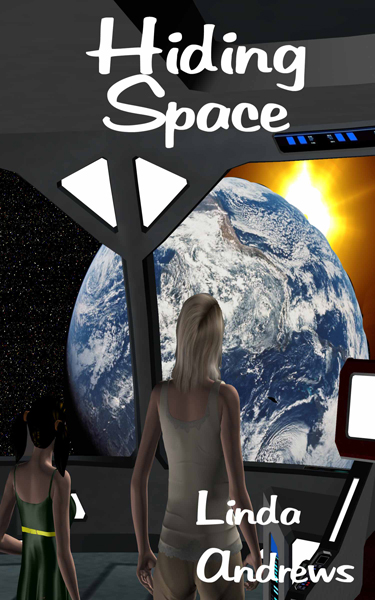
Hiding Space

Commander Brongill of Da’Hap heads the expedition to Earth in hopes of finding the survivors of an ancient crash and the key to Terrill’s survival. But Brongill knows first-hand how his race treats its saviors and decides to spare the human hybrids a torturous death by making certain they never reach Terrill. His mind is firmly set on revenge until he meets her…

Alderina Wedgen wants nothing more than to raise her three children in peace. What she gets is kidnapped by aliens, seduced by a secretive commander and nearly blown-up. Facing a common enemy, she has no choice but to form an alliance with a man who once considered killing her–a man who is relentless in pursuing what he wants.

But while the universe is vast, Ally and Brongill soon find that there is no hiding space and to survive the trip they’ll have to risk more than their hearts and lives.

Now available at Under the Moon

Posted in Books | Leave a comment

Writing Ghosts

To Believe or not to believe? That is the question.

Shamelessly rephrasing Shakespheare aside, I am referring to ghosts and the belief in whether or not they exist. I know of a certainty that believing is seeing, even when there’s nothing to see. Studies have shown that the mere idea of a haunting makes people more susecptible to encountering spooks and phantoms. The commn term of the phenomenon is mass hysteria and like fear and sneezing it is contagious.

But what about the other group, the nonbelievers? Is believing seeing? Nope. But it may nudge them in the direction of belief or at least shake their non beliefs.

Case in point: My sister, her husband and their son went to Scotland to visit a notorious haunted castle. My sister and her son are open to the idea of ghosts, her husband humors her.

The afternoon was waning by the time the tour started. Long shadows added to the spooky atmosphere and there was a palpable expectation, a breathless anticipation of an encounter to come. In one windowless room, the tour stopped and the guide told of the tragedies that unfolded. Voices from the group behind them echoed in the cavernous room but after a while, my sister and her family were able to ignore the murmurs and focus on the story.

It was then my sister and her son noticed the shadows on the rugs. More silhouettes than could be cast by the small tour. Some vanished while others appeared, yet the people stood still. When they moved on, my sister mentioned it to her husband. “A trick of the light,” he assured her.

Cold spots aside (it is a drafty, old castle), the tour ended with no other supernatural phenomenon. A little disappointed, my sister and her family prepared to leave. As they thanked their guide, her husband quiped that perhaps they should space the groups further apart because the talking from the tour behind them had been so loud that he had a hard time enjoying the retelling of history of the place.

With a start, the guide told them that their group had been the last one of the day. There had been no one behind them.

Did my brother-in-law change his beliefs? Nope. He’s certain there’s a rational (read nonspectral) explanation, but, maybe, just maybe…

In Ghost of a Chance, the hero Everett Grey is of the same rational. A no nonsense former Union spy, he knows there’s always a human culprit behind every bit of mischief. But doubts undermine his certainty when he hires Brighid Garvey as a wet nurse. Brighid knows the living and the restless spirits of the dead coexist, the constant presence of her Gran’s spirit won’t let her forget it.

And Gran is going to make certain Everett learns that death doesn’t stop some folks from protecting their loved ones.

Posted in Science, Writing | 2 Comments

The soundtrack of writing

Music to Write By

Like most writers, I listen to music when I write. But not just any music. I find that I’m the most productive when I listen to the tunes on my MP3 players. I’ve had my SanDisk for over 5 years and while my children had outgrown theirs and went for bigger and better players, I’ve kept shuffling music in and out of my 1 GB player.

I kept it up until this past Christmas when I asked my husband for a newer model. 8 GB on my new SanDisk Clip. Yipee. Some songs were easy to move over as I’d just downloaded a bunch of Christmas songs like Boney M’s Mary’s Boy Child, Dean Martin’s and Martin McBride’s Baby It’s Cold outside, Vince Vance and the Valiant’s All I want for Christmas and the every quirky I wanna Hippopotamus for Christmas. There are lots more including the classics by Elvis and Johnny Mathis. And while I do listen to Christmas music from May to January, I did download others–like Adam Lambert, Miranda Lambert, Rascall Flatts, Lady Gaga, Daughtry, and Glee’s version of Forget You. Each song appealed to me not just because of the beat but because of the lyrics.

I love song lyrics. They’re say so much with so little it sparks something in my brain and unleashes the flow of words and makes writing easier.

Choosing the newer songs was easy–going through my collection of old CD’s to pick the songs that appeal to me was hard.

Until I realized I had 8 GBs.

So I spent my vacation ripping CDs to my computer than syncing them to my MP3 player. Old gems I’ve rediscovered to go with my current Urban Fantasy story are:

Desperate but not Serious by Adam Ant

Teach Your Children Well by Crosby, Stills and Nash

Love of the Common People by Paul Young

Selling the Drama by Live

Have you Ever Seen the Rain by Credence Clearwater Revival

Objection (Tango) by Shakira

Found out about you by the Gin Blossoms

Silent Running by Mike and the Mechanics

and

Full of Grace by Sarah MacLaughlin

Posted in Music, Writing | Leave a comment

Flu pandemics in Fiction

While most would agree that death and disease are not laughing matters, they provide plenty of fodder for fiction writers.

Why?

Aside for the drama of life and death stakes, pandemics have played pivotal roles in human history. Europe would probably still have a feudal system if it wasn’t for the Black Death. World War I might have dragged on for longer than four years with both sides still eagerly engaged in chemical warfare if it weren’t for the Flu Epidemic of 1917-1918.

With these epic changes to draw upon, writers can take that ‘what if’ scenario to unexpected places, especially when the villain of the piece is something invisible to the naked eye and nearly impossible to fight.

To many who pen action adventure stories these kinds of events are like locked room deaths to mystery writers. I’ve used them twice now. Once in my current Sci-Fi novel and the second in my fantasy novel Dancing in the Kitchen, after all what good is a death stone to an evil sorcerer if he/she doesn’t use it?

In my defense, I’ve worked as a microbiologist in a pharmaceutical company and government for years. So I drew upon what I knew and combined it with my love of horror, history and natural disaster movies, documentaries and books.

Listed in no particular order are some of my favorite microbe related movies:

I am Legend

Omega Man

Outbreak

Virus

The Hot Zone

Resident Evil

Night of the Living Dead

Posted in Movies, Science, Writing | Leave a comment